
Substance Abuse Therapy
in Boulder, CO
Signs it might be time to talk to someone about your drinking or substance use

Many people wonder whether their substance use is “bad enough” to seek help. The truth is that therapy can be helpful long before things reach a crisis point. If you’ve been thinking about your relationship with alcohol or other substances, that curiosity alone can be a meaningful place to start.
Some common signs people decide to seek support include:
Drinking or using more than you planned
Difficulty cutting back despite wanting to
Using substances to cope with stress, anxiety, trauma, or sleep problems
Feeling hungover, tired, or mentally foggy more often than you would like
Concerns from a partner, friend, or family member
Feeling conflicted about your substance use
Wondering what life might feel like with less alcohol or fewer substances
You don’t have to label yourself as having a substance abuse problem or meet a specific diagnosis to benefit from counseling. Many people struggle with their relationship with alcohol or other substances at some point in their lives.
Substance use challenges exist on a continuum.
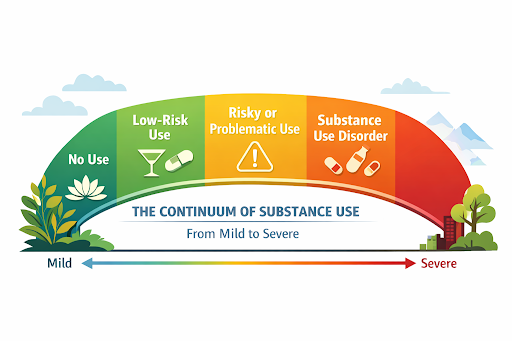
Some people experience occasional periods of heavier use during stressful times, while others find that alcohol or drugs have become harder to control and are beginning to impact their health, sleep, work, or relationships. Wherever you are on that spectrum, therapy can provide a supportive space to explore what is happening and decide what changes—if any—you would like to make.
Have questions? Reach out!
Why traditional substance abuse treatment doesn’t work for everyone
For decades, most substance abuse treatment programs in the United States have followed a fairly narrow model built around abstinence, residential treatment, and 12-step recovery programs such as Alcoholics Anonymous. For many people, this approach can be life-saving. But it does not work for everyone—and increasingly, clinicians recognize that recovery is not one-size-fits-all.
People have different histories, personalities, cultural backgrounds, and goals. Effective care needs to reflect that diversity.
Not everyone wants or needs immediate abstinence
Traditional substance abuse counseling programs often assume that complete sobriety must be the starting point. While abstinence is the right goal for some people, others may initially want to:
moderate their drinking
take a break from substances
change high-risk patterns
understand why they use substances in the first place
Research shows that many people successfully improve their relationship with alcohol and other substances through moderation or gradual change. When treatment only offers abstinence, some people disengage before they have a chance to benefit.

The 12-Step Model doesn’t fit everyone
Twelve-step programs for substance abuse emphasize concepts such as powerlessness over addiction and reliance on a higher power. While many individuals find community and meaning in these ideas, others may struggle with aspects of the model because:
They prefer a secular or science-based framework
They want to build a sense of self-efficacy rather than powerlessness
The spiritual language does not resonate with them
Group meetings feel uncomfortable or not culturally aligned
A more flexible approach
My approach to therapy for substance use problems is to focus on meeting people where they are and helping individuals build a healthier and more intentional relationship with substances.
Rather than assuming there is only one path forward, we will work together to clarify your goals. For some people that means reducing or moderating alcohol or substance use. For others it means taking a break from substances or pursuing long-term sobriety. The focus is on helping you develop greater awareness, healthier coping strategies, and a relationship with substances that supports your overall well-being.

In our work together we may explore:
•Patterns and triggers related to alcohol or substance use
•The role substances may play in coping with stress, trauma, or anxiety
•Strategies for reducing cravings or high-risk situations
•Improving emotional regulation and resilience
•Building alternative ways to relax, connect, and unwind
In my practice, I integrate motivational interviewing, cognitive behavioral strategies, mindfulness practices and harm reduction principles into the process of substance use counseling. These methods help people better understand the underlying drivers of substance use and build practical skills for making sustainable changes.
Motivational Interviewing (MI)
Motivational Interviewing is a supportive, practical approach that helps you take an honest look at your substance use and decide what you may want to change. Instead of judging, lecturing, or telling you what to do, we have real conversations about what drugs and/or alcohol is doing for you and what it may be costing you. Together, we explore your goals, your values, and the kind of life you want to be living. The focus is on helping you feel clearer, more confident, and more in control. If you choose to make a change, we'll work together to build a plan that feels realistic and doable for you.
Harm Reduction
Harm reduction is a practical, non-judgmental approach to substance use that focuses on reducing risks and improving safety. Instead of requiring abstinence as the first step, it meets people where they are and supports realistic changes that lower harm and increase stability. For someone who is working on their alcohol use, this might include setting limits on how much or how often you drink, spacing drinks over time, alternating with water, eating before drinking, avoiding high-risk situations like driving, tracking use, planning alcohol-free days, or using medication supports when appropriate. The philosophy is grounded in autonomy and collaboration: any positive change including safer patterns, fewer consequences, and better health is meaningful progress.
I have a particular interest in supporting veterans and LGBTQIA+ individuals. Many people in these communities have complex relationships with substances that are connected to trauma, identity, or attempts to manage overwhelming experiences. Therapy can offer a nonjudgmental space to explore these challenges and develop healthier paths forward.

What to expect in your first session
Beginning therapy can feel like a big step. The first session is designed to be a relaxed, collaborative conversation where we get to know each other and begin understanding what brings you in.
During our initial meeting we will typically discuss:
What prompted you to seek support now
Your current relationship with alcohol or other substances
Your goals or hopes for therapy
Important life experiences that may be shaping your current challenges
Strategies that may already be helping—or not helping
There is no pressure to have everything figured out before the first session. Many people arrive feeling uncertain about what they want to change, and part of the process is gaining clarity together.
My goal is not to confront you or make you adopt a label as an addict or an alcoholic, but to create a space that feels safe, respectful, and free from judgment, where you can speak openly about your experiences and begin exploring new possibilities for your life.
If you’re curious about changing your relationship with alcohol or other substances, I invite you to reach out to me.
Substance abuse posts


Substance Abuse Therapy in Boulder, CO
2401 Broadway St
Boulder, CO 80304
(303) 335-9339
Online and In person Sessions Available